RumorGuard analyzes viral news stories and shows the reasoning for if they are true or not. They list 5 factors that help identify truthfulness: authenticity, source, evidence, context, and reasoning. Authenticity determines if it’s real or doctored. Source determines if there is a credible source that is promoting the story. Evidence determines if there’s any other evidence the story actually happened. Context helps decide if there is additional context that is added to the story that would determine legitimacy. Reasoning determines if the news is realistic and not just playing on emotions. For example, a video of Trump’s name being taken off the Kennedy Center was determined to be AI generated.
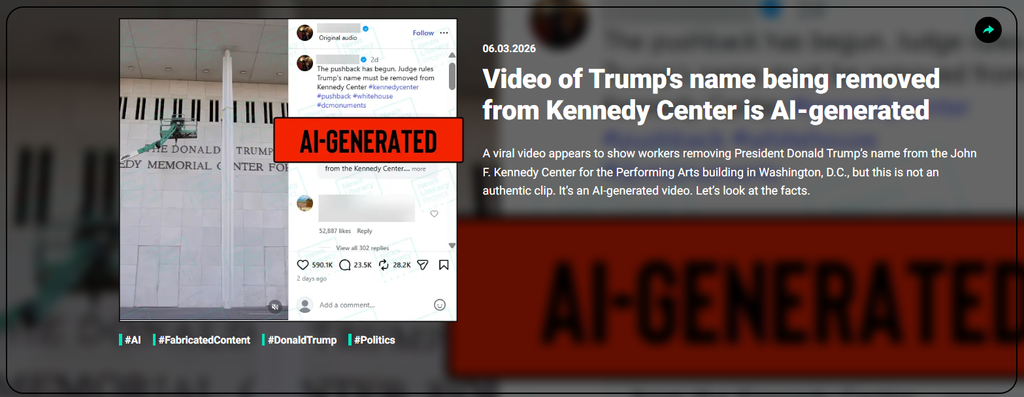
The video was determined to be not authentic, not from a valid source, and there was no evidence to back up the claim. They noted that the video was AI generated, and the last name Kennedy was misspelled in the video. This website teaches viewers how to better spot fake and doctored news. It helps explain the multiple things to look out for and how to spot them. Tackling misinformation with games: a systematic literature review backs the factors promoted on the website. It further enforces the importance of verifying the integrity of the source, whether or not there is evidence to back up the claims and the, “quality and trustworthiness,” of the claims themselves.
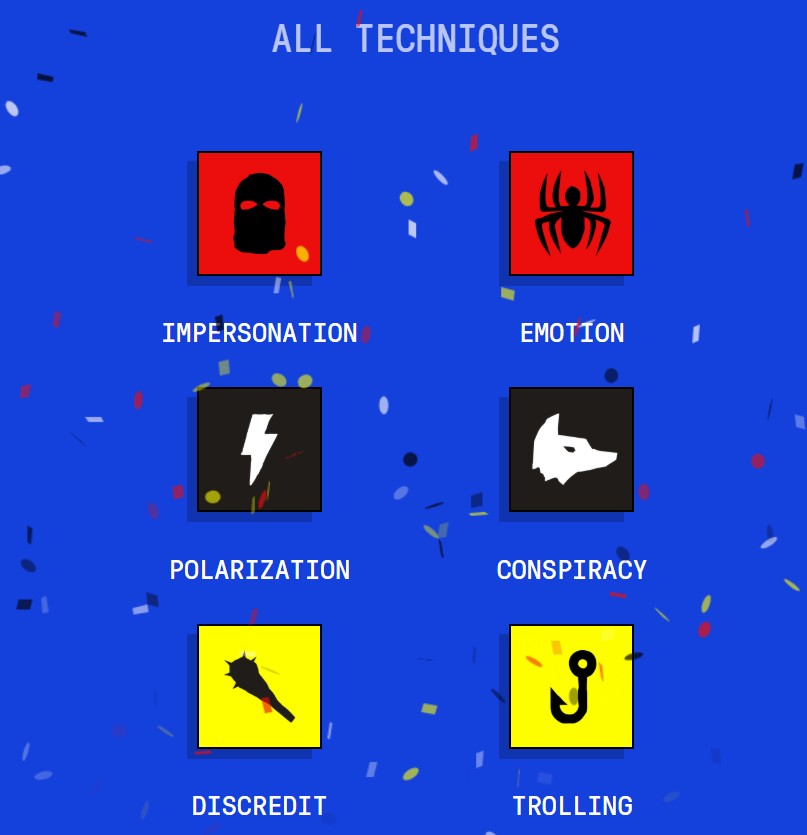
The Bad News game was very interesting to play. It walks you through how easily it is for a random person to spread false news. You start by impersonating someone credible, with only a small change to the name.
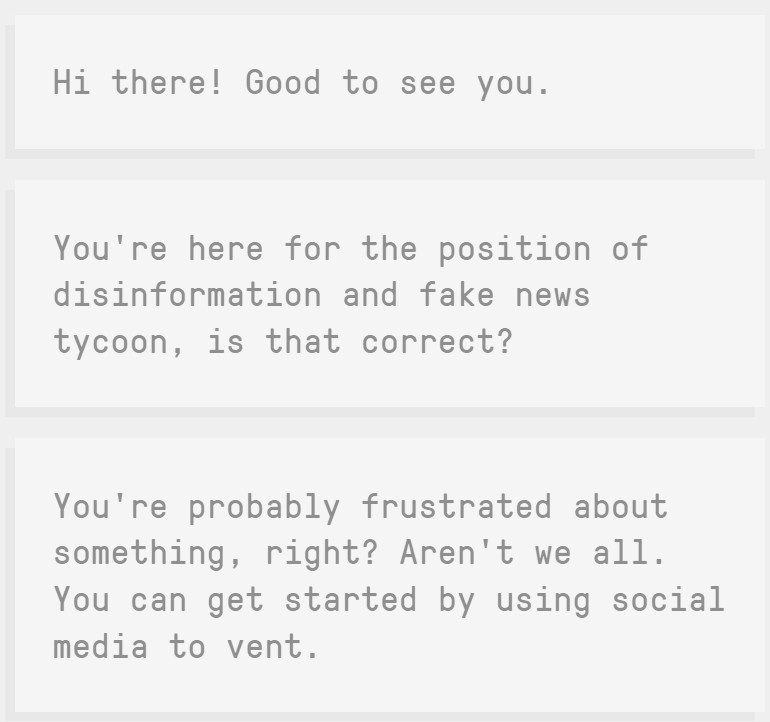
Then, you play on the emotions of social media users and create a page that looks legit. You then become a polarizing force, by separating you from others i.e. liberal vs republican.
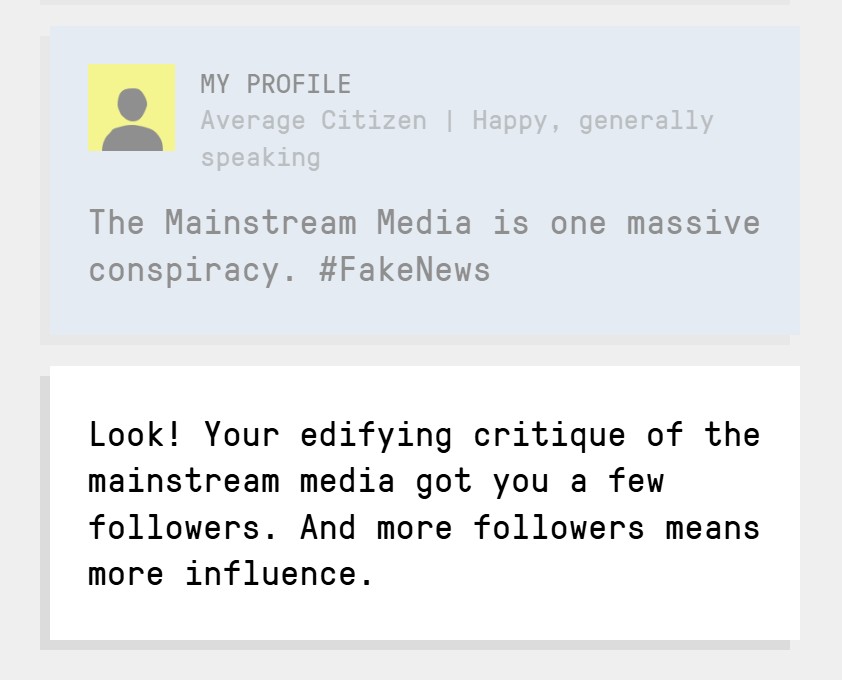
You then start posting untrue conspiracy theories without any real evidence. You get followers to believe you because of their outstanding bias and abusing their emotions towards certain subjects. You then attempt to discredit those that go against you and ruin their reputations. In the end, you’re a troll pumping out misinformation.
This game was interesting because it shows the player how easy it is to spread false information on social media. Anyone can make an account and publish any opinion they want. According to Harvard Kennedy School, game play allows users to effectively learn lessons and engage with real world activities in a safe and controlled environment. This allows users of Bad News, and other websites to gain knowledge on the ease of spread of misinformation, without having to spread any misinformation on social media in real life.
Bad News and RumorGuard are both useful websites in today’s day and age. With the uptake of social media, false information can be shared more easily than ever before. Both websites help users find ways of determining whether information is real or fake. These tools with be helpful in the future and will help stop the spread of misinformation.
Leave a Reply